Personal and Intimate Care Guidelines
Introduction
Intimate and personal care is defined as any care which involves washing, touching or carrying out an invasive procedure that most young people can carry out for themselves. Young people with Cerebral Palsy, Muscular Dystrophy, Downs Syndrome, Epilepsy, Diabetes, Autistic Spectrum Disorder amongst many others may be unable to meet their own care needs for a variety of reasons and may require regular or occasional support whilst at Hipp!!Bones.
Staff maybe required to support with oral/gastrostomy feeding; administering oral or rectal emergency medication; washing non-intimate body parts; toileting and dressing; or menstrual management.
Volunteers will only assist with some aspects of basic personal care, eg help with undressing/dressing where an activity requires it, the supervision of young people involved in intimate self-care, if this is needed; or accompanying a member of staff toileting a young person where the need for a second person is identified in their Intimate Care Plan.
Aims
The aim of this document is to:
- Provide guidance and reassurance to staff and volunteers, and
- Safeguard the dignity, rights and well-being of the young people who require personal and intimate care
Intimate Care Plans
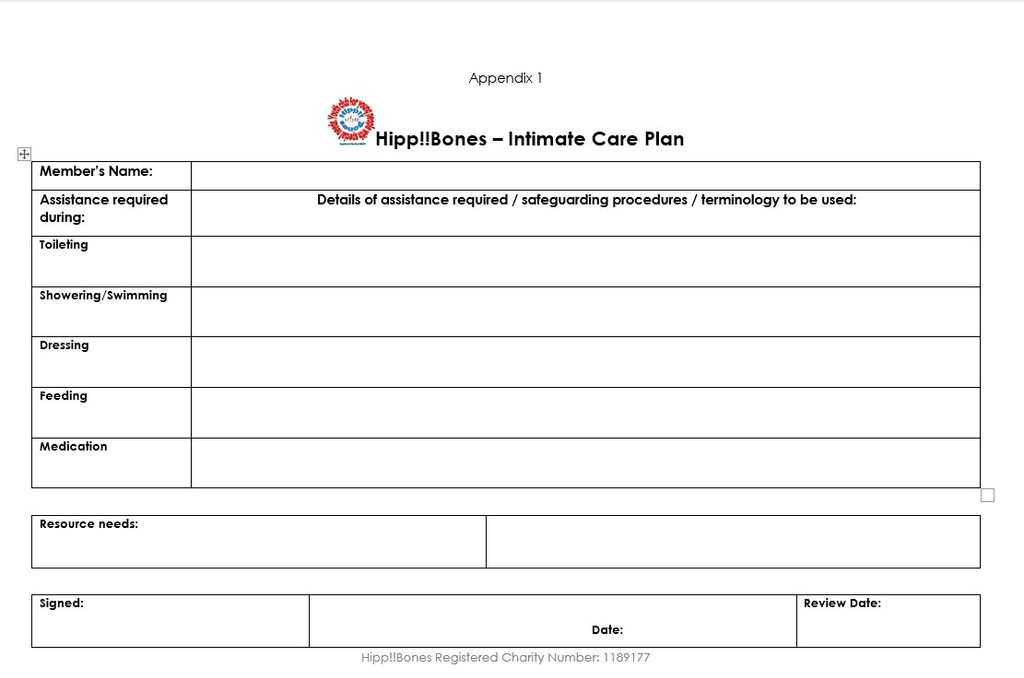
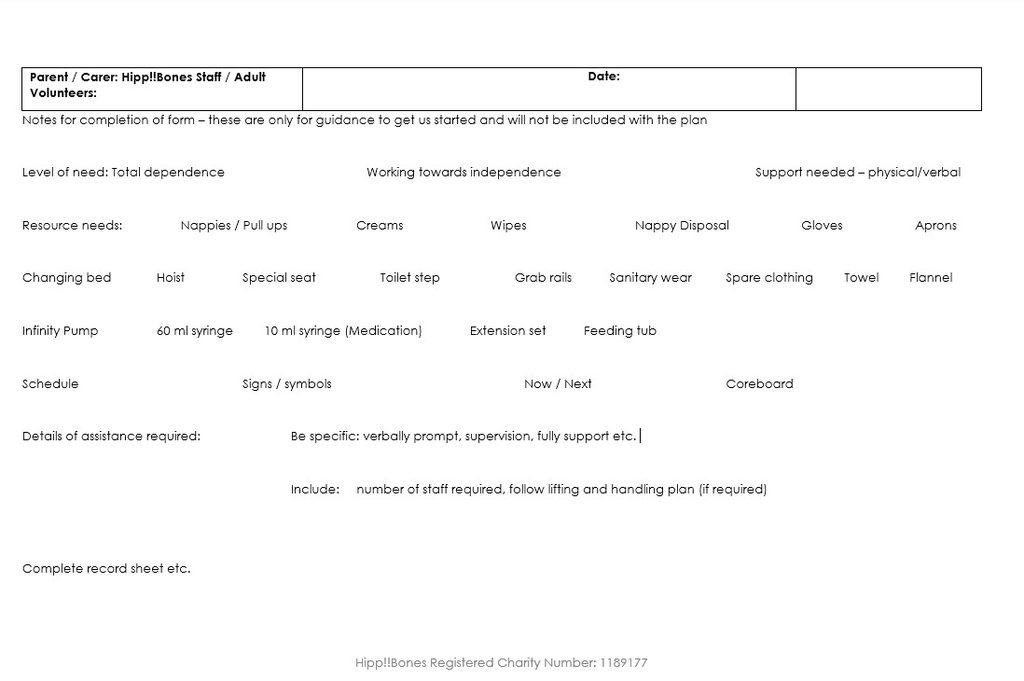
- Members who need regular or occasional support with personal or intimate care will have an Intimate Care Plan (see appendix 1). The plan will be written with input from the young person (where possible) and the parents/carers. It will explain the assistance required and give detailed instructions and safeguarding information for each task required. The intimate care plan will be reviewed annually or following any significant change.
- The religious views, beliefs and cultural values of the young person and their family will be considered when writing the Intimate Care Plan
- The Intimate Care Plan will focus on the importance of working towards independence, and will clearly record roles, responsibilities and expectations.
- All staff/volunteers involved in intimate care should read the young person’s Intimate Care Plan and sign it before intimate care procedures are carried out, wherever possible.
Young Person’s Voice
It is important that the young person, subject to their understanding, is allowed to express a preference regarding their intimate care. Terminology for private parts of the body and functions to be used by staff/volunteer should be agreed in the intimate care plan. It is the responsibility of staff members to be aware of the method and level of communication used, and to take the lead when supported by DBS cleared volunteers. This could include signs, symbols, core boards, eye pointing or vocalisations.
Vulnerability to Abuse
Disabled children and young people are particularly vulnerable to abuse and discrimination. Therefore, it is vitally important that all staff members and volunteers are familiar with Hipp!!Bones Safeguarding Policy and Dealing with Disclosures of Abuse Guidelines.
Disabled young people can be more vulnerable to abuse because:
- they often have less control over their lives than their peers
- they do not always receive appropriate sex and relationships education, or if they do they may not understand it, so are less able to recognise abuse
- they may have multiple carers through different placements
- changes in appearance, mood, or behaviour may be misinterpreted as a characteristic of the young person’s disability rather than abuse
- they may not be able to communicate what is happening to them
Intimate care that involves touching the private parts of a disabled young person may leave staff / volunteers more vulnerable to accusations of abuse, this places an important responsibility on staff / volunteers to work within agreed procedures.
Good Practice in Intimate or Personal Care
- Staff and adult volunteers who have undergone safer recruitment checks, including enhanced DBS checks, can support young people with intimate care.
- Always seek the permission of the young person before starting an intimate care procedure, using the young person’s preferred means of communication.
- Being aware of any cultural or religious sensitivities related to aspects of a young person’s intimate care
- Encourage the young person to work towards independence and do as much as possible for themselves.
- Give clear prompts to allow the young person to anticipate and prepare for events e.g.: show a wet wipe to indicate your intention to their wipe face.
- Staff will wear disposable gloves and aprons, following infection control guidelines
- Wherever practical, staff should only provide intimate care for a young person of the same sex.
- Inform another member of staff before going to assist a young person with intimate care.
- Provide a safe working environment by training designated staff and adult volunteers in safe moving and handling etc.
Record Keeping
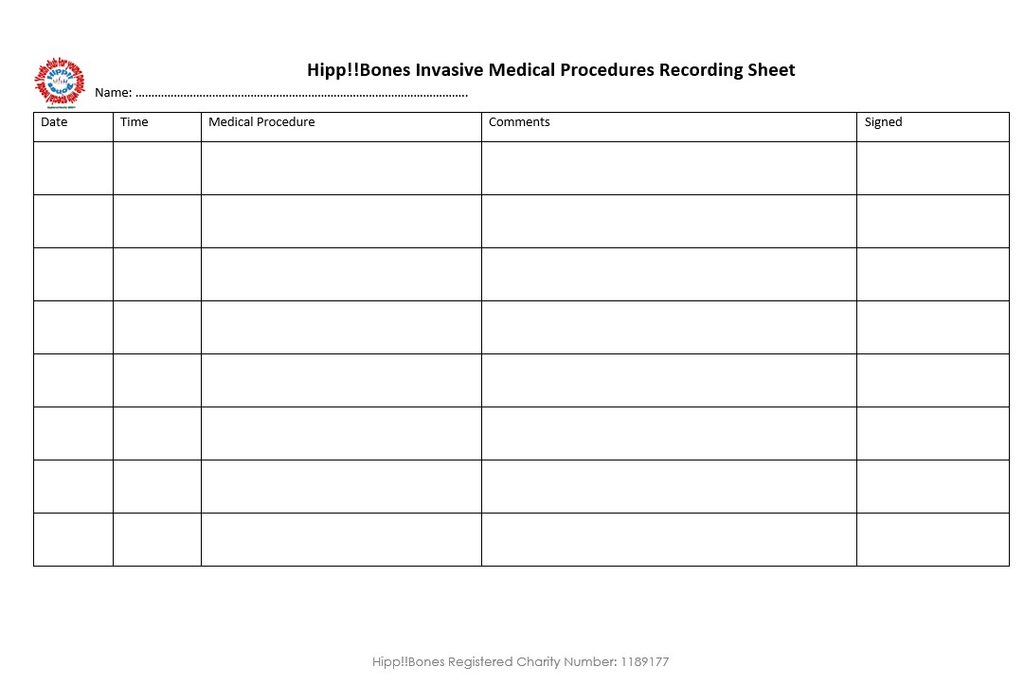
- A written record will be kept every time a young person has an invasive medical procedure, e.g. support with a gastrostomy feed or administration of rectal valium (see appendix 2).
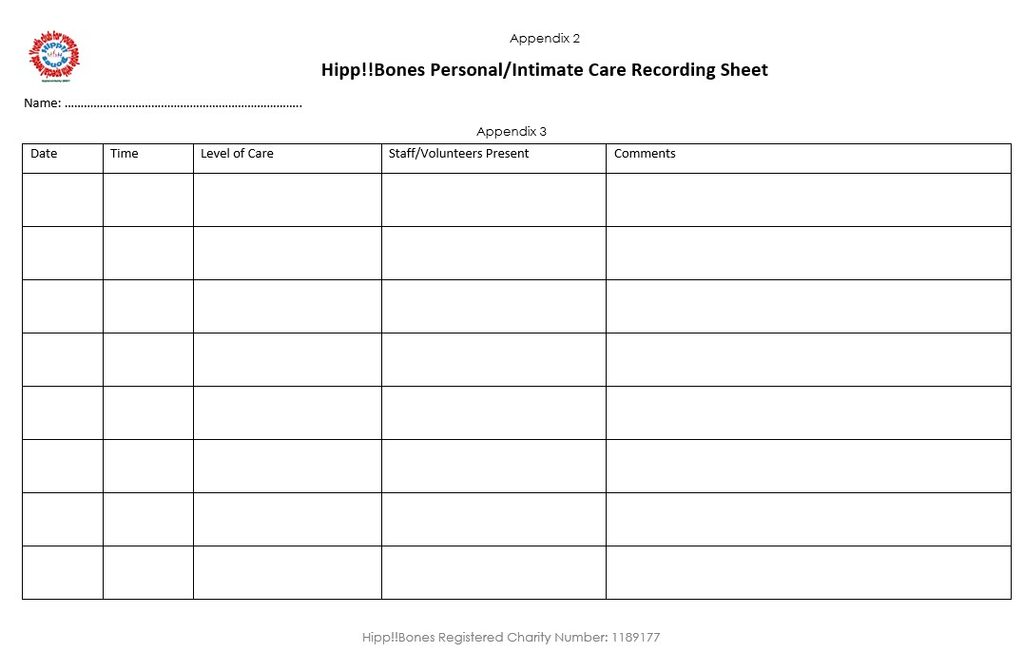
- Accurate records will be kept when a young person receives intimate care. These will be brief but will include date, time, level of care given, who was present and any comments (see appendix 3).
- Records will be kept in a personal/intimate care file and are available for parents/carers to see on request.
- If a young person without an intimate care plan has an ‘accident’ (e.g. wetting or soiling themselves) whilst at Hipp!!Bones and needs assistance with personal or intimate care the parents/carers will be informed as soon as possible by telephone.
Safeguarding
- If a member of staff has any concerns about physical or behavioural changes in a young person’s presentation, e.g. marks, bruises or soreness, they will immediately pass their concerns to the Designated Safeguarding Lead.
- In the event of an allegation being made against a member of staff, volunteer or another young person, the procedures for Dealing with Disclosures of Abuse will be followed.
Medical Procedures
- Medical procedures will only be carried out by staff who have been trained by a relevant health professional.
- Staff will follow infection control guidelines and ensure that any medical items are disposed of correctly.
- When carrying out medical procedures, a young person’s privacy and dignity will be respected at all times.
Moving and Handling Procedures
- Hoisting and other procedures identified in a young person’s Moving and Handling Plan / Intimate Care Plan will only be carried out by trained staff.
Confidentiality
Information provided in Intimate Care Plans will be shared with staff/volunteers, as appropriate, who will treat it as confidential. Such information must not be used to intimidate, humiliate, or embarrass the young person concerned.
Appendix 2